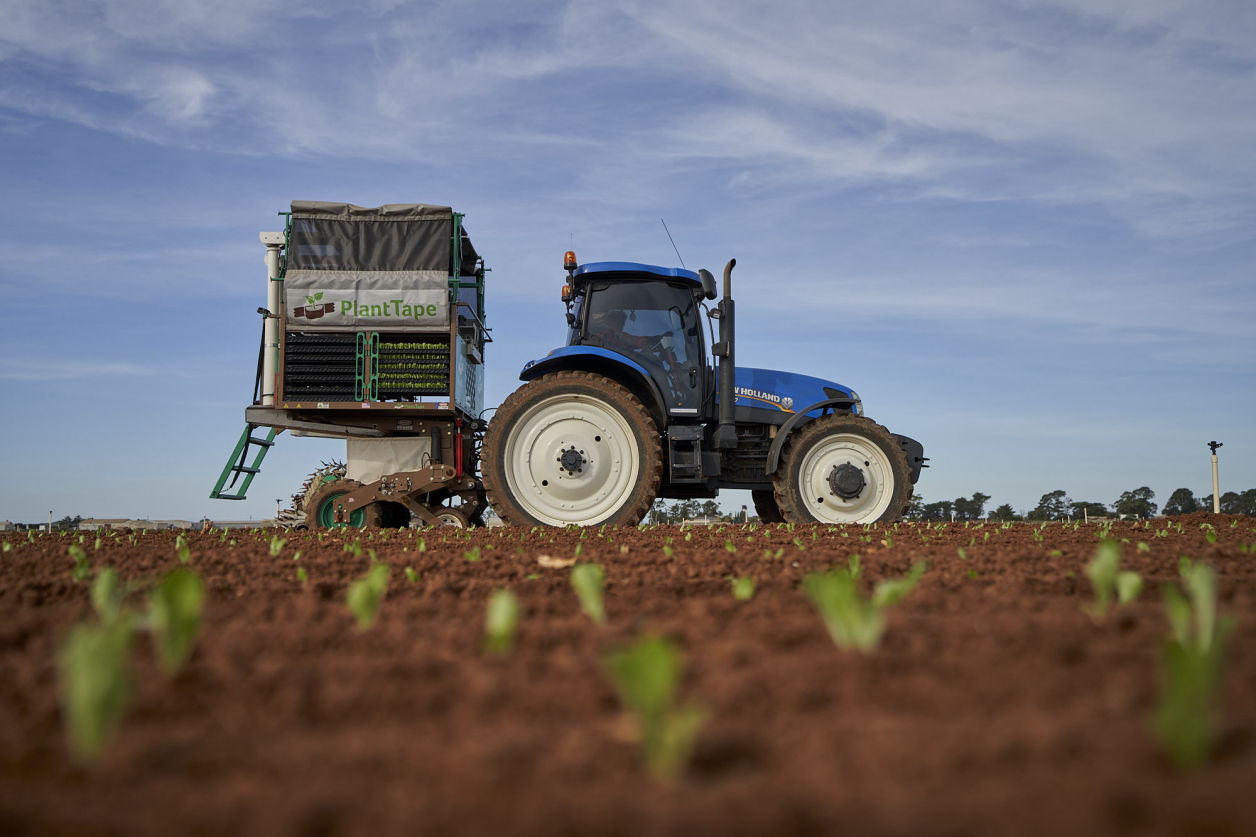
From healthier seedlings to dramatic labour cost savings, PlantTape revolutionises the transplanting process across the world. The automated transplanter offer flexibility, consistency and is the choice for large volume growers.
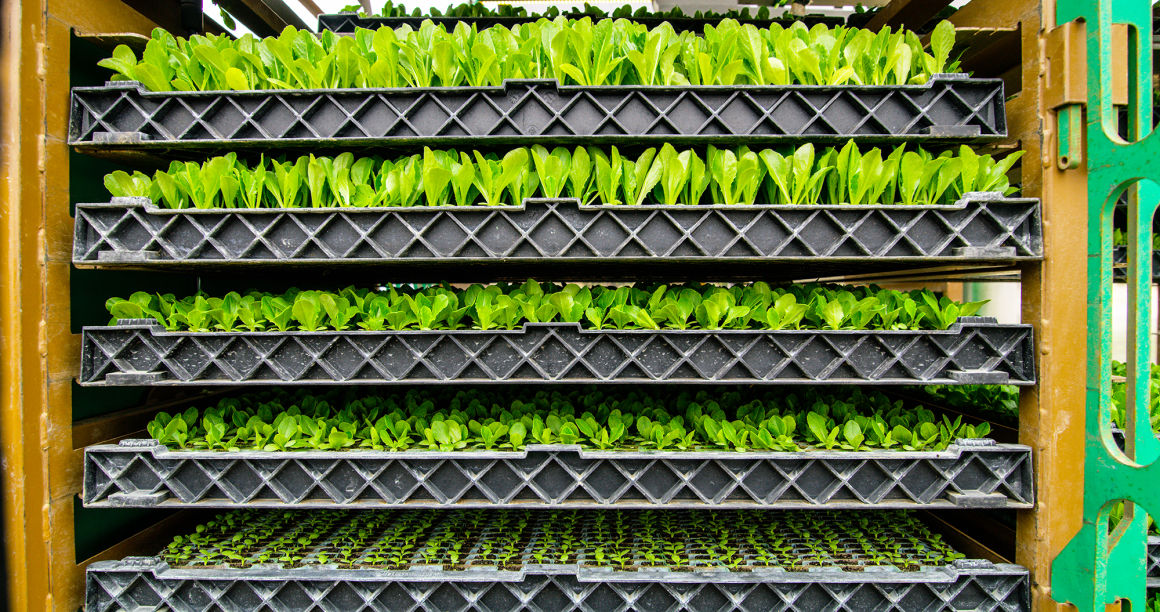
100,000 plants per hour in high density planting. Each tape in each tray is
clipped to the next to provide a seam-
less transplanting from tray to tray.
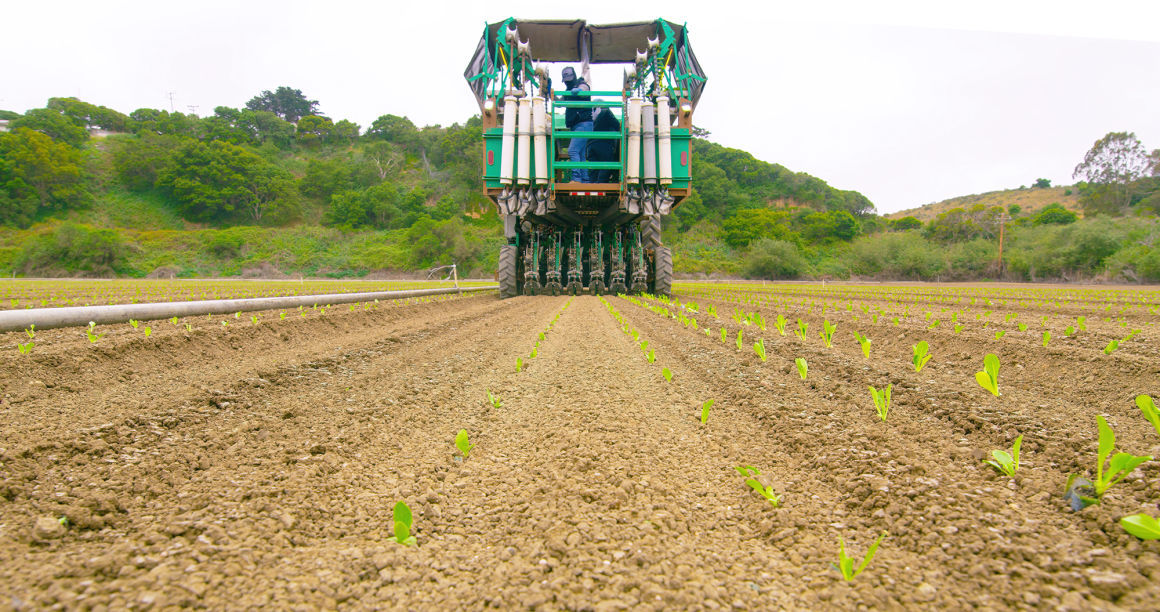
The planter module cuts the tape between plants and places each seedling into the soil according to precise plant spacing and depth settings.
With 840 plants per tray and over 90,000 plants in a single rack there is lots to save on transport. Conventional trays hold 240 plants and weigh the same.
The future is all about efficiency and reducing your carbon footprint
High density trays require less handling per plant. The planter only requires 1 driver and 1-2 operators to swap and join trays while planting.
Ease of operation and very little training required before you are ready to enjoy the benefits of Plant Tape.
Conventional vegetable transplants grow in a containerised soil plug that forces the roots to grow in a tight ball.
Once transplanted, the conventional seedling undergoes significant transplant shock while the roots untangle themselves and grow into the surrounding soil.
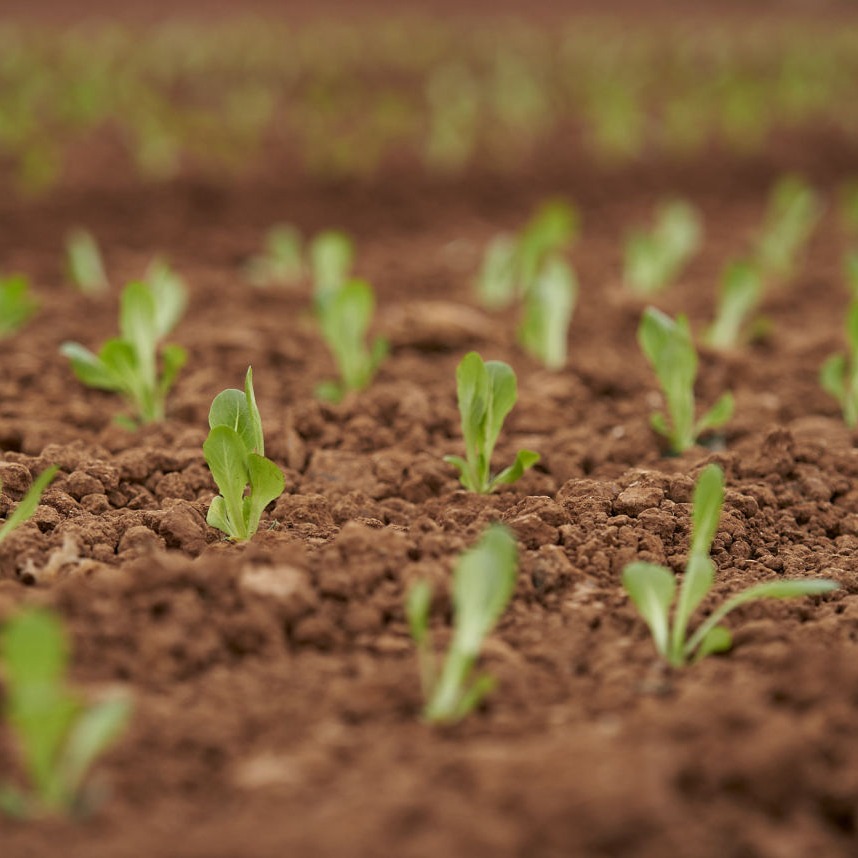
PlantTape transplants grow in an open-bottom plug that encourages a natural root architecture that quickly grows downward and outward to establish the plant in the soil.
PlantTape’s open-ended plugs allow the actively growing, viable roots to explore a wider range of soil. They can then form a stronger fibrous root system by tapping into more nutrients.
PlantTape reduces transplant shock to vegetable seedlings because the transplanter pulls the tape from the nursery trays, cuts the tape, and places each transplant—still in its paper encapsulated plug—into the ground without ever touching the plant.
No manual handling of seedlings, no trauma from being uprooted.
To demonstrate PlantTape’s ability to transplant seedlings at almost any maturation stage, we recently loaded our transplanter with six lines of romaine, each line being a different aged plant, and planted it near Salinas, CA.
On the far left, a line of romaine sown one week prior, with cotyledons barely sprouting. On the far right, a line of romaine at 6 weeks with 4-5 true leaves and three-inch tall plants. In between were lines of romaine at 2, 3, 4, and 5 weeks.
When we checked in on the 6 lines a few weeks after planting, all seedlings were thriving. Obviously this is purely to highlight just how strong and durable our plants are even from a very early stage.